We Care About Your Privacy
By clicking “Accept all”, you agree to the storing of cookies on your device to enhance site navigation, analyze site usage, and assist in our marketing efforts. View our Privacy Policy.
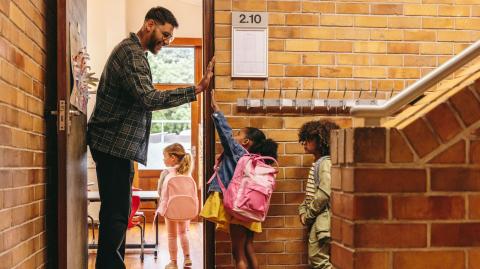
Many refugee learners arrive at their new school carrying far more than a backpack - they may also carry experiences of trauma, loss, and uncertainty. Their journey to the school gates might have come after experiences of war, separation from family members, or long periods without education. While schools cannot erase trauma, they can provide safety, stability, and belonging. For such learners, school becomes the first place where life and routine begin to feel predictable again.
Refugee learners often arrive carrying emotional stress that is not always immediately visible. Some learners may appear withdrawn and quiet, while others may become anxious, easily upset, or struggle to concentrate. Many are also learning a new language while trying to adapt to unfamiliar routines, expectations, and friendships. Naturally, these pressures can affect confidence, wellbeing, and academic progress.
Research strongly highlights the important role that schools play in supporting refugee learners. Kia-Keating and Ellis (2007) explain that:
‘Schools are one of the first and most influential service systems for young refugees.’
This means that everyday school experiences matter enormously. A warm welcome at the classroom door, a predictable routine, or a trusted adult who listens can all help learners feel emotionally safer.
Simple actions often have the greatest impact, e.g. introducing a buddy system for newly arrived refugee learners; older multilingual learners helping newcomers find classrooms, understand routines, and join playground games or after-school clubs; creating visual timetables and multilingual welcome displays. This can reduce the feeling of isolation and develop confidence.
Belonging is one of the strongest protective factors for refugee learners. Feeling accepted and included helps learners rebuild confidence and emotional security after displacement. Kia-Keating and Ellis (2007) also found that:
‘A greater sense of school belonging was associated with lower depression and higher self-efficacy.’
This sense of belonging is often built through small but meaningful interactions, e.g. peers showing interest in home languages, teachers learning how to pronounce names correctly, or schools celebrating multilingualism as a strength rather than a barrier.
Teachers play a key role in creating emotionally safe classrooms. Refugee learners often benefit from calm routines, clear explanations, and structured opportunities for talk. Collaborative learning activities can help learners develop friendships alongside language skills. Creative subjects such as art, music, and drama can also provide valuable opportunities for expression, especially for learners who may not yet have the English needed to explain complex feelings.
Supporting refugee student mental health also involves working closely with families. Parents may themselves be coping with uncertainty, financial pressure, or trauma. Some families may come from cultures where mental health is rarely discussed openly. Schools that communicate sensitively, use interpreters where necessary, and build trusting relationships with families are often better able to support children successfully.
Importantly, teachers’ role is to create compassionate, stable environments while recognising when specialist support may be needed. Research by Noyes, Kubishyn and Brown (2025) highlights that:
‘Refugee children and youth benefit from evidence-based psychological interventions in school and community sites.’
Ultimately, schools can become places where refugee children begin to feel hopeful again. When learners feel welcomed, understood, and included, education becomes more than academic learning; it becomes part of healing, rebuilding identity, and creating a sense of future.
Schools of Sanctuary across the UK also play an important role in supporting refugee and asylum-seeking children. The Schools of Sanctuary initiative encourages schools to create safe, welcoming, and inclusive environments where all learners feel valued regardless of their background or immigration status. Many schools involved in the programme develop pupil-led awareness projects, celebrate cultural diversity, and provide targeted pastoral support for newly arrived families. These approaches help strengthen belonging and community understanding across the whole school.
There are also several organisations that schools and families can access for further support:
References
Kia-Keating, M. and Ellis, B.H. (2007) Belonging and connection to school in resettlement: Young refugees, school belonging, and psychosocial adjustment, Clinical Child Psychology and Psychiatry, 12(1), pp. 29–43.
Noyes, A., Kubishyn, N. and Brown, J. (2025) A mixed systematic review of interventions to support the well-being of refugee youth in school and community settings, Children and Youth Services Review, 176.
There is no denying that in the 21st century, teachers have gone from strength to strength in using technology in the classroom and this has changed the classroom landscape significantly. The digital age has introduced new avenues to explore for learning and teaching beyond the traditional classroom methods.
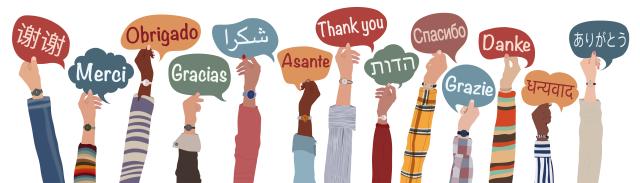
你好 Привіт Merhaba Здравей Buna ziua ہیلو Cześć
How often do you hear these in the school playground? And actually, not just in the playground… Do you know which language they are from? Have a guess!
(Here is the answer: Mandarin, Ukrainian, Turkish, Bulgarian, Romanian, Urdu, Polish)
What happens when a child never hears their own language or they can never identify with any of the characters in the stories they read at school?


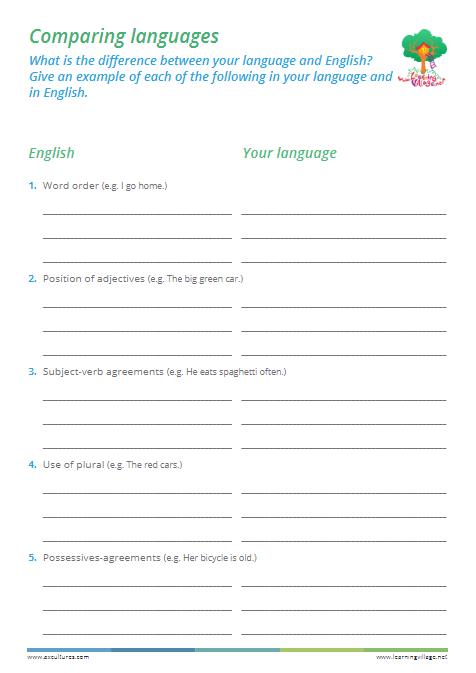

A lovely resource which encourages your learners to explore an interesting image and create and discuss their own.


Blended vocabulary, language structure and reading programme for EAL and multilingual learners
Once you have registered for your free trial we will be in touch to get you started on the first step of your Learning Village Journey.