We Care About Your Privacy
By clicking “Accept all”, you agree to the storing of cookies on your device to enhance site navigation, analyze site usage, and assist in our marketing efforts. View our Privacy Policy.
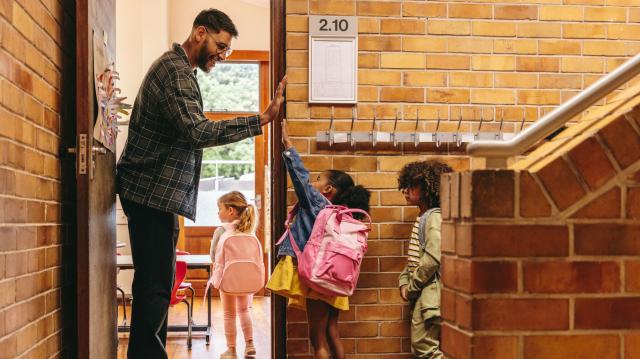
Walking into a new secondary school is a daunting experience for any learner. Now imagine doing it in a country you have only recently arrived in, surrounded by unfamiliar routines, new classmates, and a language you do not yet fully understand.
For newly arrived multilingual learners, those first few weeks can shape not only their academic progress but also their confidence and wellbeing.
Before learners can fully engage with lessons, they need to feel that they belong.
Simple gestures matter. Learning how to pronounce a learner’s name correctly, introducing them to a friendly peer buddy, providing a visual map of the school, or displaying signs in different languages all send a powerful message: You are welcome here.
Just as importantly, make space for learners' home languages. Encouraging learners to draw on the languages they already know does not slow down English learning, it actually strengthens it. Cummins (2001) highlights that recognising learners' linguistic identities helps build confidence, participation, and achievement.
When learners do not yet have the English to follow lengthy explanations, visuals become one of the most powerful teaching tools available.
Concrete images, diagrams, graphic organisers, demonstrations, and real objects help learners grasp meaning without relying solely on translation. They reduce anxiety, make lessons more accessible, and allow students to participate alongside their peers from the very beginning.
This principle sits at the heart of Learning Village, where concrete images help learners develop understanding directly, whatever their home language or starting point in English.
New arrivals should not have to wait until they are fluent before they can learn subjects such as Science, History, or Geography. Instead, language and subject knowledge should grow together.
Teachers can make this easier by introducing key vocabulary before a lesson, modelling sentence structures, providing speaking prompts, and offering writing frames that are gradually removed as confidence develops.
As Gibbons (2015) explains, scaffolding is not about making learning easier. It is about giving learners the support they need today so that they can work independently tomorrow.
Learners make the greatest progress when English is something they actively use, not simply something they study. Structured pair work, collaborative activities, and purposeful classroom talk give learners regular opportunities to listen, practise, and communicate in meaningful contexts.
Krashen (1985) suggests that language develops most successfully when learners are exposed to English they can understand, with enough support to make the new language meaningful. Visual learning, clear modelling, and carefully planned classroom interactions all help create this kind of rich, immersive environment where confidence grows naturally.
Every newly arrived learner brings a different story. Some have strong literacy skills in their home language, while others may have experienced interrupted schooling or little formal education.
Understanding learners' starting points helps schools provide the right support and track the progress that follows. Regular assessment also gives teachers valuable evidence to inform next steps and celebrate the often remarkable progress multilingual learners make.
When all staff use support strategies and approaches that are backed by evidence, they can create classrooms where learners with a wide range of language backgrounds and literacy levels can understand, participate, and achieve from day one. Every teacher can play their part in this. Many schools choose programmes that reflect these principles to support their multilingual learners, helping teachers provide visual support, structured language development, meaningful opportunities to use English, and ongoing assessment. This evidence-informed approach is reflected within Learning Village and supports schools to build inclusive practice that benefits newly-arrived multilingual learners.
References
Cummins, J. (2001) Language, Power and Pedagogy: Bilingual Children in the Crossfire. Clevedon: Multilingual Matters.
Gibbons, P. (2015) Scaffolding Language, Scaffolding Learning: Teaching English Language Learners in the Mainstream Classroom. 2nd edn. Portsmouth, NH: Heinemann.
Krashen, S.D. (1985) The Input Hypothesis: Issues and Implications. London: Longman.


There is no denying that in the 21st century, teachers have gone from strength to strength in using technology in the classroom and this has changed the classroom landscape significantly. The digital age has introduced new avenues to explore for learning and teaching beyond the traditional classroom methods.
In today’s multilingual classrooms, teachers are constantly balancing between helping learners access the curriculum content whilst supporting the development of their English language skills. For those of us who teach EAL learners, the question isn’t what to teach, but how to make the curriculum accessible without diluting its richness and simplifying it too much.
Many refugee learners arrive at their new school carrying far more than a backpack - they may also carry experiences of trauma, loss, and uncertainty. Their journey to the school gates might have come after experiences of war, separation from family members, or long periods without education. While schools cannot erase trauma, they can provide safety, stability, and belonging. For such learners, school becomes the first place where life and routine begin to feel predictable again.


The 10 most recently created lessons by the Learning Village team:
Blended vocabulary, language structure and reading programme for EAL and multilingual learners
Once you have registered for your free trial we will be in touch to get you started on the first step of your Learning Village Journey.