We Care About Your Privacy
By clicking “Accept all”, you agree to the storing of cookies on your device to enhance site navigation, analyze site usage, and assist in our marketing efforts. View our Privacy Policy.
This morning my 4-year-old said, "Mummy, there are two languages, child's language and adult language". I asked her what she meant and she explained that when her friend was crying the teacher told her to read her the "owl" book. She then said, "The teacher reads the words but the child changes it." A young child may not be able to read, or retell the story using the actual words but often can retell it in their own words. A bit like a translation, as my daughter illustrated. The key factor is not the actual words, but the story behind the words. The comprehension and listening skills in a younger child are therefore of paramount importance and will constantly be developed through story telling.
More information about reading for EAL, SEND and low-level literacy learners
The use of literature should never be underestimated. A young child is exposed to new vocabulary and syntax that they may not come across in every day life. Furthermore, a life long love of books and reading is fostered. Computers, televisions and films cannot replace the imagination, creativity and incidental learning it sparks. Vocabulary, grammatical structures, tenses and connectives can all be found in the written texts. Comprehension skills are also developed. I aways remember reading my first difficult Spanish book when doing my A level. For the first two pages I looked up all the new words, it took too long. By the time I reached the third page I was interested in the book and suddenly it all made sense.The key factor was interest, even though a book may be challenging for an EAL learner if they really interested they can work out the key elements of a book without understanding every word.
I was fortunate enough to attend a conference on language in the Primary Years Program where the dominant theme was the use of literature for language learning. Literature is like the vehicle that enables language learners to develop and enable them to arrive at their destination. In literature, children are exposed to language and vocabulary that they may never encounter otherwise and familiar language and structures are reinforced. For example, narratives like all text types have a purpose and structure. The learning can be done in a less formal way, noting new vocabulary, finding equivalents in their home language, finding synonyms for words, highlighting particular tenses, grammar or sentence structures.
Practical literature ideas for teachers
An EAL book club is a great way of students sharing their learning. Students can write a synopsis of a book they have read and give a recommendation out of 10 as well as saying whether it was easy, average or difficult. The reviews could then be displayed in the library for readers.
For upper primary books, reading can be a way of a child understanding a particular point in history. The "Horrible History" books are a fun way for children in primary schools to learn about about ancient civilisations and their idiosyncrasies. The illustrations are useful for the more visual EAL learner as they depict aspects of history in a vivid way. "Adrian Mole's Diary" is a good one for students on their transition to secondary school as it portrays aspects of teenage life in an entertaining and amusing way. The Twilight series and Harry Potter are all good reads for the older children. However, it is important that students choose books that are interesting to them. Something they are passionate about.
The list of good books is endless, I have chosen some that I have found to work well with students and that can be used as a spring board for further activities. The key to a good book, according to the Oscar First Book Prize judges, is illustrations, whether it is imaginative, original, has drive or a message.
Play is a crucial part of language development and ideas for play and games are an essential part of any teacher’s toolkit. One of the most informal and obvious contexts for language development takes place in the playground for any child (Pinter, 2006). Children will often pick up every day language from their peers and this can be an essential part of their learning. Pinter (2006) explains that when a child moves to a new country, after the initial silent phase, children will then start to pick up phrases, conversation language and so-called playground language fairly fast.
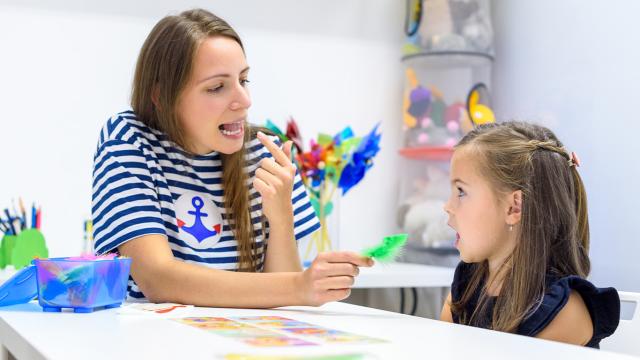
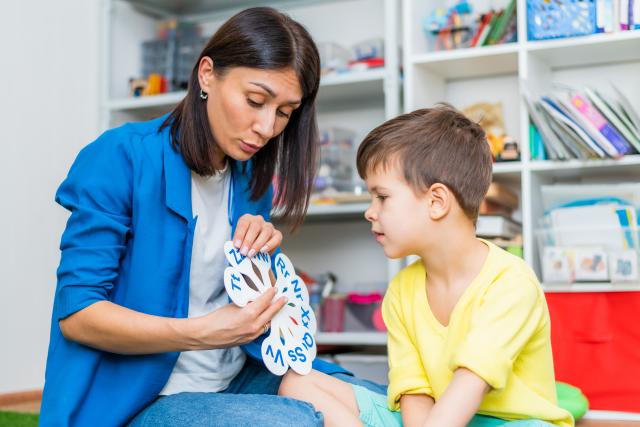
In English, there are 44 speech sounds. Creating speech sounds is a more complex process than you might think! It requires the coordination of different muscles and structures. The lips, tongue, teeth and other parts of our mouth all play an important role. Where learners have difficulties creating certain sounds, their fluency, ability to be understood and confidence in speaking aloud can all be affected.
An EAL teacher is a professional specialising in working with learners for whom English is an additional language, such as refugees, asylum seekers or children of migrant families.


Blended vocabulary, language structure and reading programme for EAL and multilingual learners
Once you have registered for your free trial we will be in touch to get you started on the first step of your Learning Village Journey.